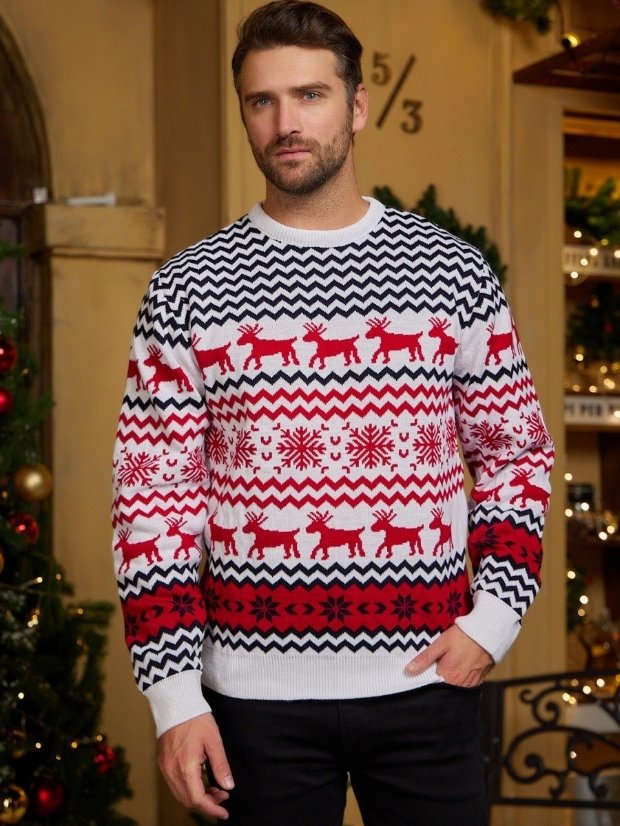
For a crewneck sweatshirt RFQ, ask Juntang Print to identify the main-body fabric separately from the neck, cuffs and hem bands. If the supplier uses a rib-fabric description, ask which actual components it applies to. The official product card identifies a crewneck reference, while the photograph shows contrasting bands; neither establishes that every section uses the same material. Request a component-by-component statement for the offered version before accepting a single fabric description for the complete garment.
Identify the crewneck version before discussing fabric
Attach the exact crewneck product reference and identify the official image used in the enquiry. The homepage presents the garment under its crewneck sweatshirt category. Use that name to locate the discussion, without treating the category label or the appearance of the patterned garment as an independent material specification.
Ask the supplier to name the offered version and connect its material response to that version. A general fabric statement for another garment should not silently become the specification for this crewneck. Keep the product reference, visible colour presentation and quotation identity together so that a returned component description can be attributed to the actual proposal.
Separate the main body from the visible bands
Ask the supplier to identify the main-body section and the components at the neck, sleeve ends and lower hem. Request separate descriptions where those components use different materials or constructions. Do not assume that a contrasting colour establishes a different fibre, or that matching colours establish an identical material.
If the supplier groups several bands under one fabric reference, ask which exact components belong to that group. A term such as rib should remain attached to the parts the supplier identifies. Do not apply it to the entire garment or infer a knitting, printing or finishing method from the visual pattern alone.
Garment component | Supplier question | Record for the offer
Main body | What fabric description applies to the main garment section? | Identified body material and composition status
Neck band | Does this component use the body fabric or another reference? | Separate neck-band description
Cuffs | Which fabric reference applies to the sleeve-end bands? | Cuff material or confirmed shared reference
Hem band | Which description belongs to the lower band? | Hem material and component scope
Shared fabric term | Which parts does the supplier include under this term? | Explicit component list
Keep composition attached to each named component
Where fibre composition is required, request it for the component being discussed. A composition statement for the main body does not automatically define the neck band or cuffs. If the supplier confirms one composition across several parts, keep that grouping explicit rather than assuming it from a general garment description.
Leave an unconfirmed composition unresolved. Do not assign a familiar fibre or percentage because the garment resembles another item. The photograph identifies a product reference; it cannot establish the material blend, fabric weight or finish of the actual offer. Request any required supporting product information from the supplier separately.
Distinguish colour decisions from material decisions
If the buyer wants the bands to match or contrast with the body, state that visual requirement separately from the material question. Ask the supplier which options it can propose for the offered version. A preferred combination in an enquiry is a request, rather than proof that the corresponding fabric or colour option is available.
Keep the accepted component materials connected to the proposed colour references. A change in band colour should not silently change its material description, and a material change should not inherit an earlier colour approval without explanation. Request the supplier’s updated component statement when a proposal is revised.
• Identify main body, neck, cuffs and hem as separate references.
• Ask which components share a supplier fabric term.
• Keep composition statements attached to the named parts.
• Approve visual options separately from material descriptions.
Keep fabric identification separate from performance
A component material statement identifies what the supplier proposes to use. It does not independently establish stretch recovery, shrinkage, warmth or durability. If those matters are part of the order requirements, request the relevant supplier information and any agreed assessment separately for the actual garment version.
Likewise, the patterned appearance does not establish how the design was produced or how it will perform during care. Keep construction, decoration and care questions distinct from the component-identification decision. Do not turn an accepted fabric label into a promise about comfort, fit, colour retention or another result that has not been supported.
Send a component-fabric clarification request
An enquiry can read: For the linked crewneck reference, please identify the main-body fabric and describe the neck, cuffs and hem separately. State which components share a fabric reference and provide the composition status for each named material. Please distinguish proposed colour options from material choices and identify any item that remains unconfirmed.
Retain the returned statement with the quotation and garment version. Request an updated component list if the supplier changes a material or proposes another version. This creates a defined fabric-scope record without inventing fibre percentages, inferring construction from a photograph or promising an unverified wearing or care result.
Frequently asked questions
Can one main-body fabric description cover every band?
Ask the supplier which components the description includes and identify any separate neck, cuff or hem reference.
Does a contrasting band prove a different fibre composition?
No. Confirm the component material separately from its visible colour.
Can the pictured pattern establish the production method?
Request the supplier’s applicable construction and decoration information rather than assigning a method from appearance.
Does a material statement verify stretch recovery or shrinkage?
Keep any required performance information and assessment separate from component-fabric identification.
Product and contact references
Product reference: https://juntangprint.com/product/crewneck-sweatshirt/
Related apparel styles: https://juntangprint.com/products/
Contact Juntang Print: https://juntangprint.com/contact/
Juntang Print blog: https://juntangprint.com/blog/